Microbiological indicators are among the important parameters of water. We have already written about microorganisms that can live in water before. Today we will focus on how to prevent their reproduction and, consequently, their negative impact.
 by Andrei Ceauru
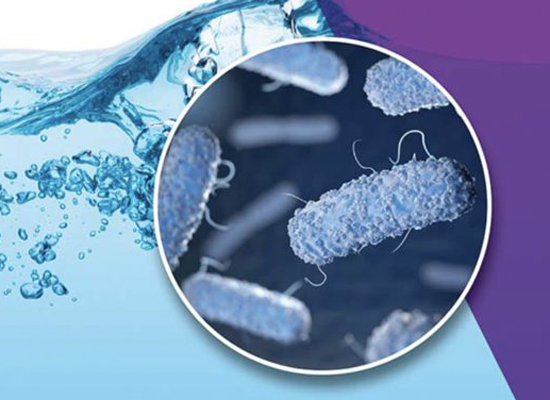 Microscopic inhabitants of aquatic environments can be divided into two groups based on their impact:
1. Bacteria, fungi and algae that cause clogging of pipes, heat exchangers, water tanks, filter components, etc., are usually introduced into water from surface sources and reproduce under favorable conditions.
Microscopic inhabitants of aquatic environments can be divided into two groups based on their impact:
1. Bacteria, fungi and algae that cause clogging of pipes, heat exchangers, water tanks, filter components, etc., are usually introduced into water from surface sources and reproduce under favorable conditions.Recommended products for a cleaner life
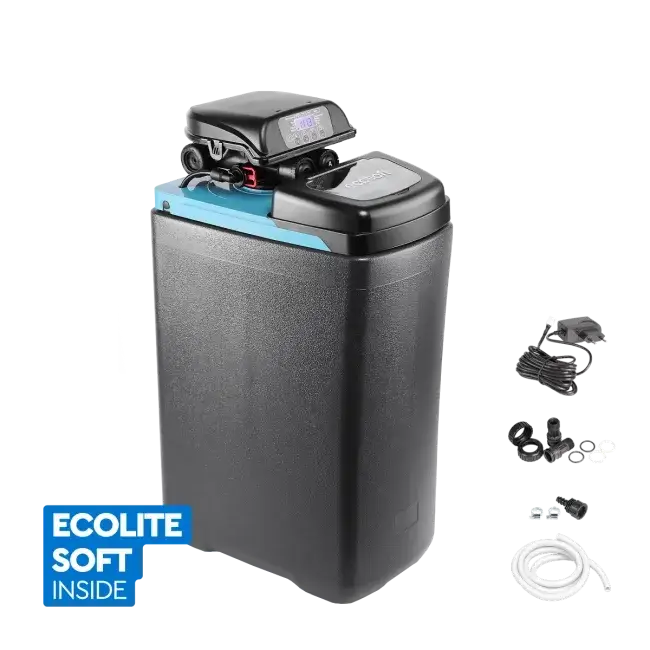
Dedurizator compact Ecosoft Core 250 cu valvă Clack DV, 25 litri rășină și debit 1.8 m3/h. Ideal pentru 2-5 persoane, protejează electrocasnicele de calcar, fără prefiltru sau întreținere frecventă.
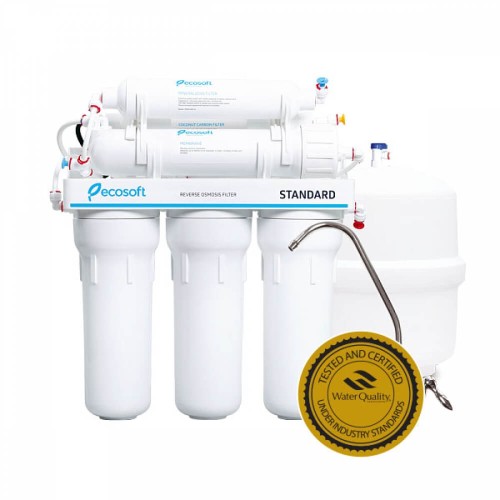
Ecosoft Standard MO650ECOST este un purificator de apa prin osmoza inversa pentru apa pura, direct la tine in bucatarie. Acest sistem este format din 6 stadii de filtrare, inclusiv o membrana osmotica de 0.0001 microni. Are si cartus special pentru remineralizare. Vasul de stocare este inclus si are un volum de 12 litri.
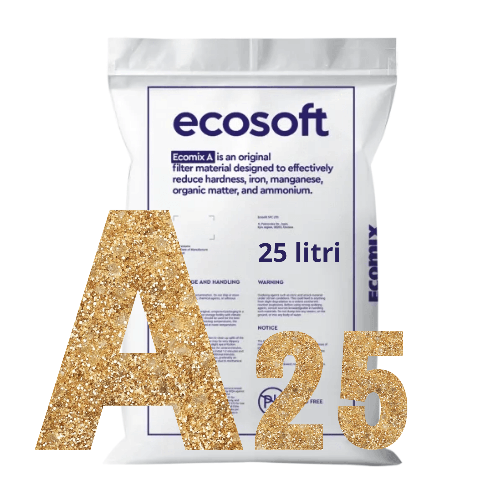
Rasina Ecomix A este un mediu filtrant format dintr-un mix de 5 rasini schimbatoarea de ioni si materiale absorbante naturale si sintetice, special conceputa pentru a elimina din apa duritatea, fierul, manganul, amoniul si materiile organice. Pretul este pe litru.
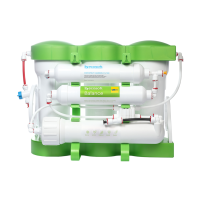
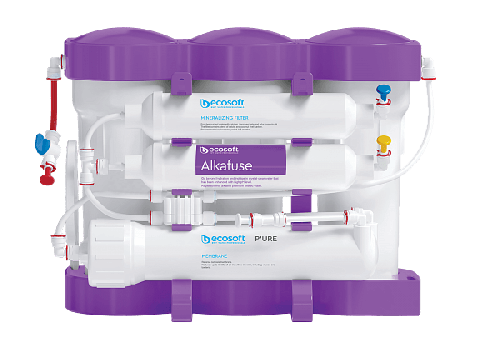
Sistemul de filtrare cu osmoza inversa Ecosoft P'URE Alkafuse este un sistem premium, compact, creat pentru a va oferi o apa pura, cu PH ridicat, direct in casa sau apartamentul dvs. De asemenea, acest sistem complet pentru filtrarea apei se poate folosi si in cabinetele medicale sau in restaurante si baruri mici. Este realizat din materiale excelente, durabile si este ideal pentru tratarea apei potabile reci.
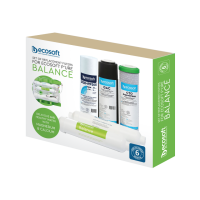
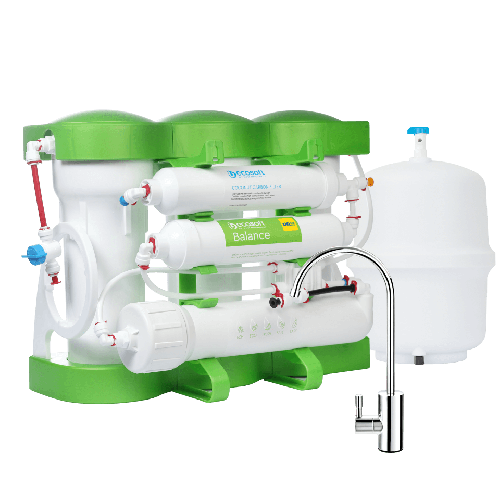
Sistemul cu osmoza inversa Ecosoft Balance MO675MPUREBAL este cel mai nou sistem de filtrare, compact, creat pentru a va oferi o apa pura, cu o mineralizare optima, direct in casa sau apartamentul tau. De asemenea, acest filtru de apa cu osmoza inversa este ideal pentru filtrarea apei din cabinete medicale, in restaurante si baruri mici. Este realizat din materiale excelente, durabile si este ideal pentru tratarea apei potabile reci.
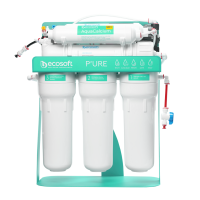
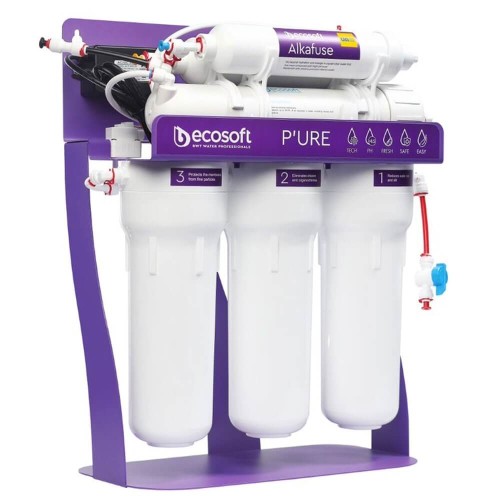
Sistem premium cu osmoza inversa cu remineralizare intensiva si crestere PH (7-10) si pompa de presiune integrata, compact, creat pentru a va oferi o apa pura, natural mineralizata cu calciu, magneziu si potasiu (60-120 mg/litru), direct in casa ta. Este realizat din materiale excelente, BPA Free, cu un cadru metalic rezistent. Se incadreaza foarte bine in spatii restranse. Cresterea PH-ului se face prin mineralizare si are valoare intre 7 si 10.






We use cookies to improve your browsing experience, provide personalized content, and for analytics. By clicking "Accept all", you agree to the cookie policy and the privacy policy.






 Reverse Osmosis
 Automatic stations
 In-line filters
 UV Sterilizers
 Clack®
 Vending
 Commercial
 Industrial
 Components
 Accessories