Str. Valea Lunga, 52-54, Bucuresti
Free shipping On orders over 599 lei
Fast delivery Next business day
Online payment Fast, safe and convenient
Special offers Discounts up to 40%
Easy return Money back in 14 days
  • Ecosoft-Romania.ro
    Ecosoft-Romania.ro

    Ecosoft-Romania.ro


    Water Disinfection: What Are the Physical Methods for Water Sterilization?

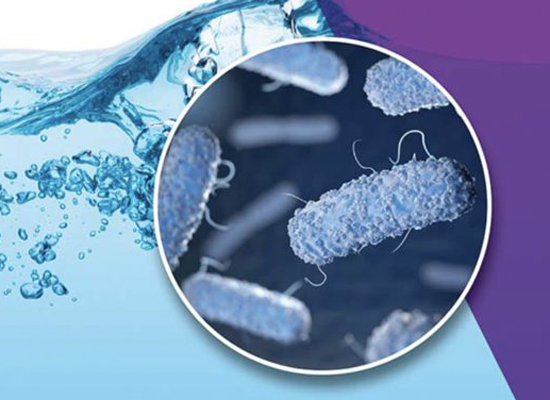
    Microbiological indicators are among the important parameters of water. We have already written about microorganisms that can live in water before. Today we will focus on how to prevent their reproduction and, consequently, their negative impact.

    Microscopic inhabitants of aquatic environments can be divided into two groups based on their impact: 1. Bacteria, fungi and algae that cause clogging of pipes, heat exchangers, water tanks, filter components, etc., are usually introduced into water from surface sources and reproduce under favorable conditions.
    2. Pathogenic and conditionally pathogenic microorganisms, such as viruses, bacteria, fungi and helminth eggs, can cause infectious diseases in humans and animals.

    Water disinfection methods are classified according to their principle of action:
    - Physical or non-chemical methods, in which disinfection occurs through the influence of physical factors (boiling, ultraviolet, electrolysis, reverse osmosis);
    - Chemical or reagent methods, in which certain reagents (chlorine, ozone, non-oxidizing agents) are added to the water;
    - Combined methods involve combining both technologies, such as ultrafiltration and chlorination.

    Physical Methods of Water Disinfection
    Disinfection without the use of chemicals has its advantages. The main advantage of these methods is usually the absence of secondary contamination from disinfectant solutions, but all these methods have a significant drawback — water can be reinfected with microorganisms, as the methods have no prolonged effect.

    Boiling Water
    This is probably the simplest way to disinfect water in domestic and field conditions. Under the influence of high temperature, the DNA structure of most pathogenic microorganisms is damaged, and they are unable to continue reproducing. Boiling is effective against all spore-forming microorganisms.

    It is important to note that for disinfection, water should not merely be brought to boiling point, but should be boiled for at least five minutes.

    ADVANTAGES:
    - Simplicity of execution;
    - No need for additional equipment;
    - Effectiveness against most pathogenic microorganisms;
    - In addition to disinfection, it reduces water hardness and turbidity.

    DISADVANTAGES:
    - Significant increase in energy consumption as water volume increases;
    - Long processing time;
    - Possibility of secondary contamination.

    Ultraviolet
    Since ancient times, mankind has known about the beneficial effects of sunlight. Thanks to ultraviolet radiation, which is one of the components of the UV spectrum, it is capable of breaking down the thymine structure in the DNA of microorganisms. As a result, bacteria and viruses lose their ability to reproduce both in water and in the human body.

    The simplest method of UV water disinfection is the SODIS method. Water, filtered to remove large mechanical particles greater than 50 microns, is poured into PET (polyethylene terephthalate) bottles, which are placed on a surface exposed to direct sunlight. The main disadvantage of this method is the need for active sunlight exposure. The method is most effective in the band between 35 degrees north and south latitude, where disinfection takes approximately six hours. As the intensity of sunlight decreases, the duration of disinfection increases.

    Water disinfection devices are produced in the form of cylindrical mechanical tubes with a quartz emitter. Water enters the housing and flows around the sleeve, thereby being exposed to UV radiation and disinfected. The wavelength in most of these devices is approximately 250 nm.

    Today, such devices are used for preventive disinfection of drinking water and household water after complex purification systems. Installing such an emitter prevents clogging of pipes, filter elements, washing machines, etc.

    ADVANTAGES:
    - Easy-to-use method;
    - No bulky equipment required;
    - No constant reagent dosing required;
    - Does not introduce secondary pollution into the water, unlike reagent-based disinfection;
    - Low energy consumption.

    DISADVANTAGES:
    - Not effective against a wide range of microorganisms; combined methods are recommended for water contaminated with pathogens;
    - Regular replacement of the irradiation source is required;
    - Water must be free of mechanical particles before passing through the device, as these can reduce the method's effectiveness by 50%;
    - No prolonged action.

    Reverse Osmosis and Ultrafiltration
    The pore size of reverse osmosis membranes is 4,000 times smaller than that of the smallest bacterial cells and 200 times smaller than that of viral particles. Therefore, such filters are capable of retaining 100% of microorganisms. The technology is used primarily for drinking water purification. It is the basis for household filters, vending machines, water kiosks and even food and beverage production.

    ADVANTAGES:
    - 100% removal of viruses and bacteria;
    - Compact size and high productivity;
    - Environmentally friendly;
    - Removal of other toxins in addition to microbiological pollutants: heavy metals, organic substances, chlorine, etc.

    DISADVANTAGES:
    - Relatively high cost of the technology;
    - Large amount of wastewater — between 20 and 70% of output, depending on membrane size and pressure;
    - No prolonged action, which limits water use directly at the point of consumption. Alternatively, water requires combined disinfection.

    Ultrafiltration membranes have relatively large pore sizes that may partially allow viral particles to pass through, so this method can only be used in combination with reagents or ultraviolet light.

    Featured products

    Recommended products for a cleaner life

    In stock
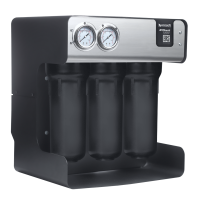
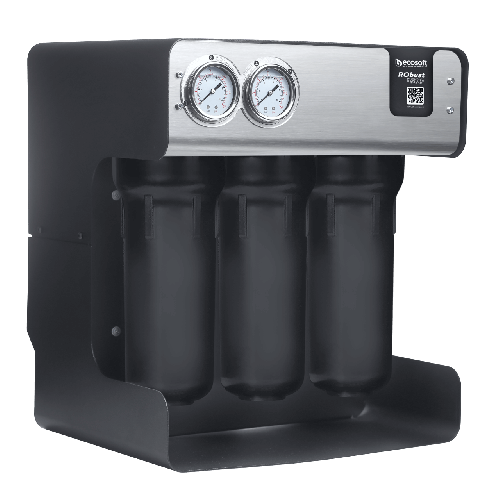
    Statie de osmoza inversa profesionala, Ecosoft ROBUST1500, membrana de 500GPD

    Statie de osmoza inversa profesionala, de mare capacitate, ideala pentru restaurante, pub-uri si cafenele. Se poate conecta la espresor, la masina de gheata sau in bar. Osmoza inversa comerciala este cea mai buna filtrare pentru cafele si ceaiuri delicioase. Are LED-uri colorate care va indica stadiul in care se afla statia.

    MSRP: 5.084,03 lei
    4.667,14 lei
    In stock
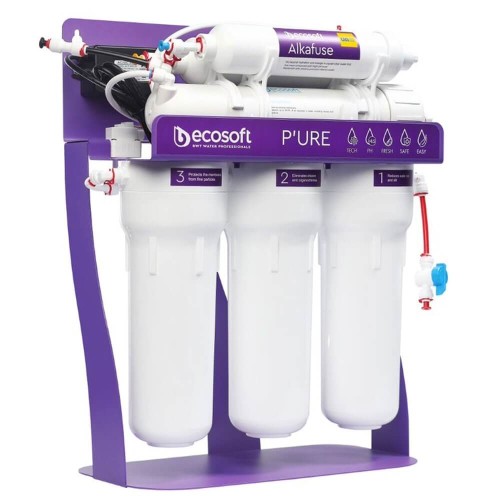
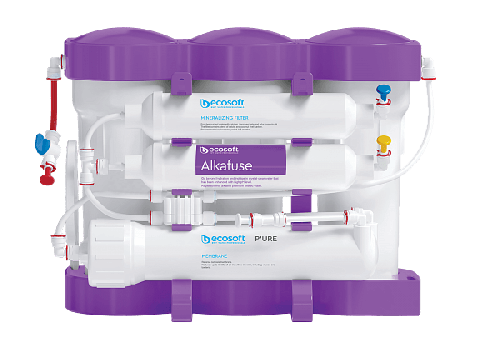
    Osmoza inversa cu alcalinizare, Ecosoft Alkafuse MO675ALCPUREDTW, 6 stadii, pompa de presiune si cadru metalic, crestere PH 7-10

    Sistem premium cu osmoza inversa cu remineralizare intensiva si crestere PH (7-10) si pompa de presiune integrata, compact, creat pentru a va oferi o apa pura, natural mineralizata cu calciu, magneziu si potasiu (60-120 mg/litru), direct in casa ta. Este realizat din materiale excelente, BPA Free, cu un cadru metalic rezistent. Se incadreaza foarte bine in spatii restranse. Cresterea PH-ului se face prin mineralizare si are valoare intre 7 si 10.

    MSRP: 2.338,66 lei
    1.524,19 lei
    In stock
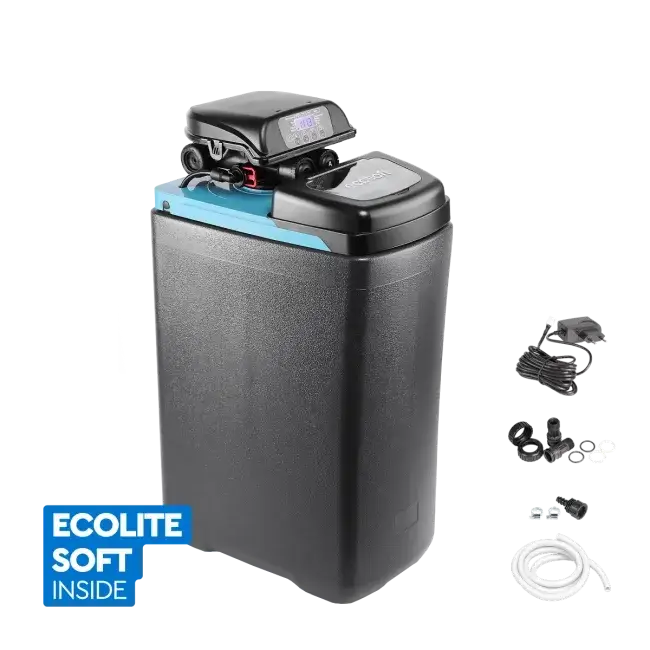
    Statie compacta dedurizare, Ecosoft Core 250, valva Clack DV, 25 litri rasina, 74 cm inaltime, debit 1.8 m3/h, 2-5 persoane

    Dedurizator compact Ecosoft Core 250 cu valvă Clack DV, 25 litri rășină și debit 1.8 m3/h. Ideal pentru 2-5 persoane, protejează electrocasnicele de calcar, fără prefiltru sau întreținere frecventă.

    MSRP: 7.900,01 lei
    3.890 lei
    In stock
    Osmoza inversa cu alcalinizare, Ecosoft Alkafuse MO675ALCPUREDTW, 6 stadii, crestere PH 7-10

    Sistemul de filtrare cu osmoza inversa Ecosoft P'URE Alkafuse este un sistem premium, compact, creat pentru a va oferi o apa pura, cu PH ridicat, direct in casa sau apartamentul dvs. De asemenea, acest sistem complet pentru filtrarea apei se poate folosi si in cabinetele medicale sau in restaurante si baruri mici. Este realizat din materiale excelente, durabile si este ideal pentru tratarea apei potabile reci.

    MSRP: 1.830,26 lei
    1.499 lei
    In stock
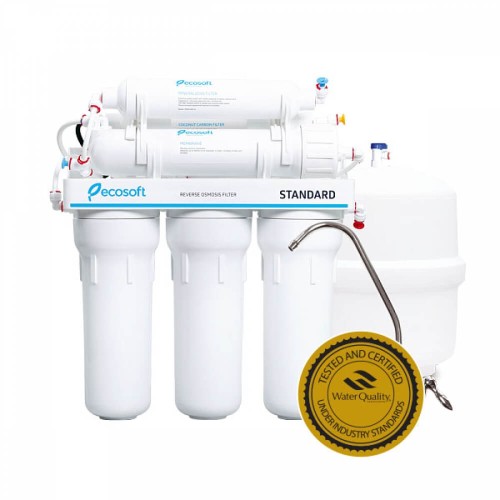
    Osmoza inversa, Ecosoft Standard MO650MECOST, 6 stadii, remineralizare

    Ecosoft Standard MO650ECOST este un purificator de apa prin osmoza inversa pentru apa pura, direct la tine in bucatarie. Acest sistem este format din 6 stadii de filtrare, inclusiv o membrana osmotica de 0.0001 microni. Are si cartus special pentru remineralizare. Vasul de stocare este inclus si are un volum de 12 litri.

    MSRP: 1.423,53 lei
    999 lei
    Low stock
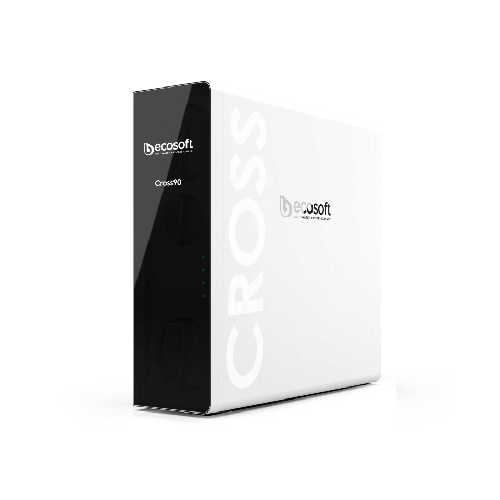
    Sistem de osmoza inversa cu debit direct, Ecosoft Cross90, 1.5 litri/min, baterie smart cu indicator

    Sistem cu debit direct, fara bazin, cu membrana de osmoza inversa de 600 GPD, conectare twist. Are baterie cu indicator smart, curatare automata si rata de recuperare de peste 50%. Debit de apa filtrata de 90 litri / ora.


    MSRP: 4.067,23 lei
    3.490 lei

    Free shipping

    On orders over 599 lei
    Fast delivery

    Next business day

    Online payment

    Fast, safe and convenient

    Special offers

    Discounts up to 40%

    Easy return

    Money back in 14 days